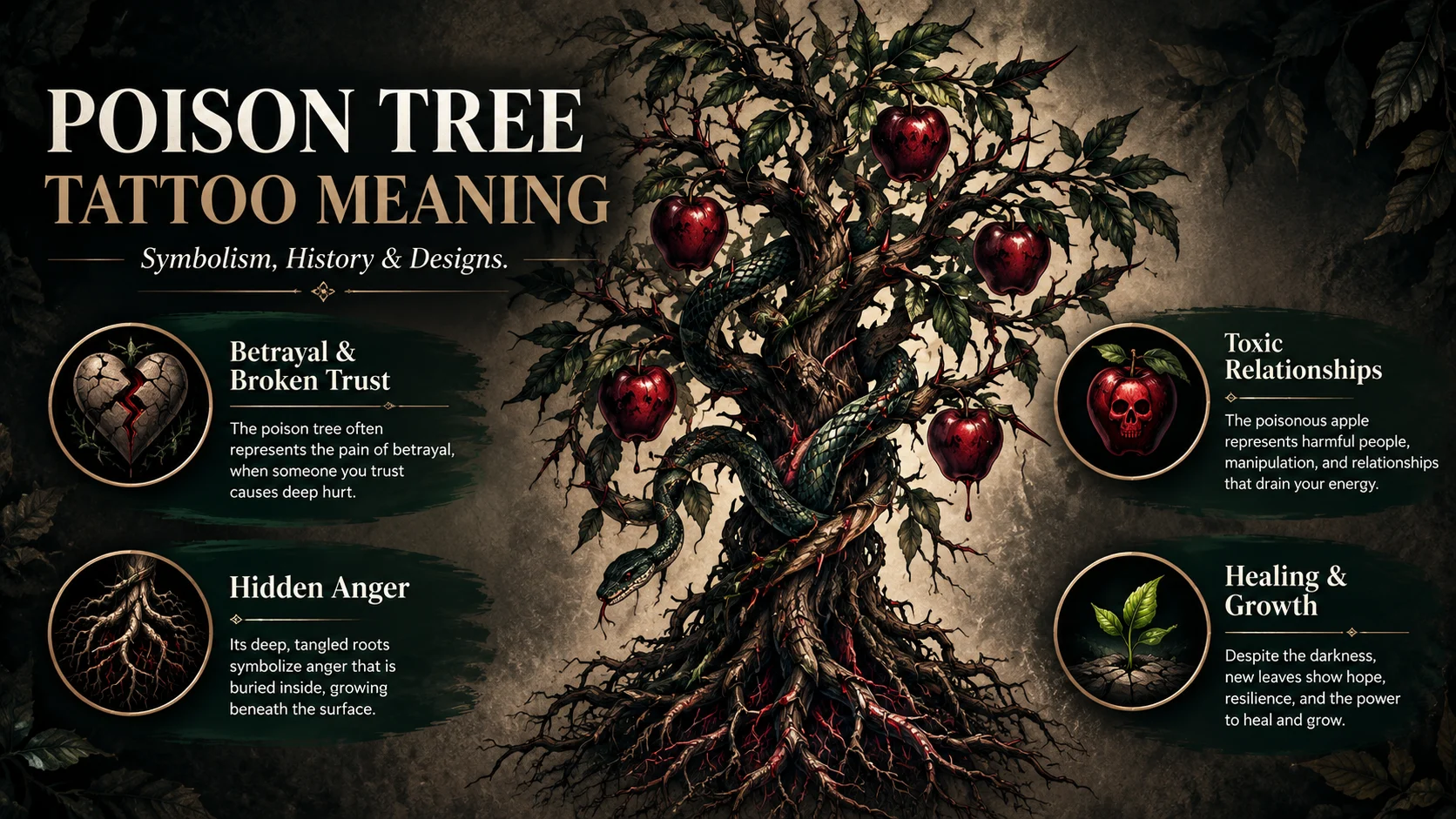
A Poison Tree Tattoo symbolizes betrayal, hidden anger, toxic relationships, revenge, and the consequences of negative emotions. Inspired by William Blake’s poem A Poison Tree, it can also represent suppressed feelings, emotional pain, personal growth, and the importance of expressing emotions before they become destructive.
The poison tree tattoo meaning is often associated with hidden anger, betrayal, toxic relationships, emotional pain, and the consequences of allowing negative feelings to grow. The symbolism is closely linked to William Blake’s famous poem A Poison Tree, which explores how suppressed anger can develop into resentment when it is not expressed or resolved. For some people, a poison tree tattoo represents the darker side of human emotions, while others see it as a reminder to set boundaries, recognize unhealthy relationships, and avoid letting bitterness control their lives. The exact meaning depends on the design, the wearer’s personal experiences, and the ideas they want to express through their tattoo.
What Does a Poison Tree Tattoo Mean?
A poison tree tattoo commonly symbolizes suppressed anger, resentment, betrayal, toxic relationships, and the emotional consequences of unresolved conflict. It can also represent personal growth, self-awareness, and the decision to break away from harmful patterns.
The image of a tree carrying poisonous fruit creates a powerful metaphor. A tree grows gradually, and its fruit develops over time. In a similar way, negative emotions can build when people avoid addressing their feelings or allow resentment to remain unresolved.
Common interpretations include:
- Hidden anger: Emotions that are concealed instead of communicated.
- Betrayal: The pain caused by broken trust or dishonesty.
- Toxic relationships: Connections that create emotional harm or encourage unhealthy behavior.
- Resentment: Negative feelings that grow when conflicts remain unresolved.
- Consequences: The results of choices, actions, and emotional decisions.
- Self-awareness: Recognizing harmful patterns before they cause further damage.
- Transformation: Learning from difficult experiences and choosing a healthier path.
Not every poison tree tattoo has a negative meaning. Some people choose it as a reminder to confront difficult emotions honestly, protect their peace, and avoid repeating past mistakes.
The meaning ultimately depends on the wearer and the story behind the design.
The Origin of the Poison Tree Tattoo Meaning
The symbolism of a poison tree tattoo is strongly connected to A Poison Tree, a poem by English poet and artist William Blake. The poem was published in his 1794 collection Songs of Experience.
In the poem, Blake compares two ways of dealing with anger. When the speaker expresses anger toward a friend, the conflict ends. However, when anger toward an enemy is hidden and allowed to grow, it develops into a tree that produces poisonous fruit.
The tree becomes a metaphor for the consequences of suppressed emotions. The speaker feeds it with fear, dishonesty, and resentment until the situation reaches a destructive conclusion.
This literary connection helps explain why the poison tree has become a meaningful symbol in art and tattoo culture.
People may interpret the tree as a representation of:
- Anger that has been allowed to grow.
- Secrets that damage relationships.
- Emotional pain that remains unresolved.
- The consequences of manipulation or dishonesty.
- The danger of allowing resentment to shape behavior.
The poem does not simply suggest that every angry feeling is harmful. Instead, it explores how anger can change when it is concealed, nurtured, and directed toward another person.
A poison tree tattoo inspired by Blake’s poem may therefore represent a warning about emotional choices and the importance of dealing with conflict before it becomes destructive.
Poison Tree Tattoo Meaning in Relationships
A poison tree tattoo can represent the damage caused by unhealthy relationships, broken trust, and emotions that remain unspoken.
Some people choose this design after experiencing betrayal or recognizing a relationship that negatively affected their emotional well-being. The tree may represent how a connection that once appeared healthy gradually became harmful.
Betrayal and Broken Trust
The poisonous fruit can symbolize the consequences of dishonesty, manipulation, or broken promises. For someone who has experienced betrayal, the tattoo may serve as a reminder to recognize warning signs and protect personal boundaries.
Toxic Relationships
A poison tree can represent a relationship that gradually becomes emotionally damaging. This might involve repeated dishonesty, controlling behavior, unresolved conflict, or a lack of mutual respect.
Hidden Resentment
Some relationships deteriorate because people avoid difficult conversations. A poison tree tattoo may remind the wearer that unaddressed problems can grow over time.
Moving On From Emotional Pain
The tattoo can also represent the decision to leave a harmful relationship behind. Rather than celebrating bitterness, it may remind someone to learn from the experience and avoid carrying resentment into future relationships.
However, a poison tree tattoo does not automatically mean someone has experienced betrayal or a toxic relationship. It can simply reflect an interest in literature, dark symbolism, or the complexity of human emotions.
Different Poison Tree Tattoo Designs and Their Meanings
The design of a poison tree tattoo can change its visual message. Some people prefer a simple, dark tree, while others incorporate poisonous fruit, dead branches, roots, or literary elements.
Poison Tree With Poisonous Fruit
A tree carrying dark or unusual fruit is one of the clearest ways to communicate the idea of hidden danger. The fruit may represent the eventual consequences of anger, dishonesty, or unhealthy choices.
Dead Poison Tree Tattoo
A dead or withered tree can symbolize emotional exhaustion, the end of a harmful relationship, or the effects of unresolved conflict. Some people may also interpret it as a reminder of what happens when negativity is allowed to take over.
Poison Tree With Twisted Roots
Twisted roots can represent deep-seated resentment, complicated personal histories, or negative patterns that have developed over time.
This design may be meaningful to someone who wants to acknowledge the roots of a problem rather than focus only on its visible consequences.
Poison Tree With Falling Leaves
Falling leaves often symbolize change, loss, and the passing of a chapter in life. Combined with a poison tree, they may represent letting go of painful experiences or recognizing that change is necessary.
Poison Tree With a Skull
A skull combined with a poisonous tree creates a darker image that may represent mortality, danger, destructive behavior, or the consequences of harmful choices.
This design is often suited to people who prefer gothic or dark illustrative tattoo styles.
Poison Tree With Snakes
Snakes can introduce themes of temptation, danger, secrecy, or transformation. When combined with a poison tree, they may emphasize the idea of hidden threats or the complexity of human behavior.
Minimalist Poison Tree Tattoo
A simple tree silhouette with bare branches or a small piece of poisonous fruit can communicate the concept without excessive detail.
Minimalist designs may appeal to people who prefer a subtle tattoo with a literary or personal meaning.
These interpretations are suggestions rather than universal definitions. The wearer can give the design a meaning that reflects their own experiences or beliefs.
Poison Tree Tattoo Meaning for People
A poison tree tattoo has no gender-specific meaning. Men, women, and nonbinary people may choose it to express emotional complexity, independence, personal boundaries, or an interest in dark literature.
For some men, the design may represent the importance of understanding anger rather than allowing it to become destructive. It can also serve as a reminder that emotional strength includes recognizing difficult feelings and responding to them thoughtfully.
For some women, a poison tree tattoo may symbolize recognizing unhealthy relationships, learning from betrayal, or refusing to allow someone else’s behavior to determine their future.
Other people may choose the design for entirely different reasons, such as an appreciation for William Blake, gothic artwork, or symbolic representations of nature.
The tree itself does not indicate someone’s personality, relationship history, or emotional state. Its meaning comes from the person’s intentions and the details they choose to include.
Poison Tree Tattoo Meaning in Literature and Philosophy
The poison tree is especially meaningful because it connects a natural image with a complex emotional idea.
In William Blake’s poem, the tree grows as the speaker continues to nurture anger toward an enemy. Its growth reflects the development of resentment, while its fruit represents the consequences of that process.
This symbolism can be understood in several ways.
The growth of resentment: Negative feelings can become stronger when people repeatedly dwell on them without seeking resolution.
The importance of communication: Expressing disagreement honestly and respectfully may prevent certain conflicts from becoming more damaging.
The consequences of deception: Concealing hostility or using dishonesty to harm another person can lead to destructive outcomes.
Personal responsibility: The poem encourages readers to consider their own role in the way anger develops and influences their actions.
The difference between emotion and behavior: Feeling angry is a normal human experience. The poem focuses on how anger is handled and what happens when it is deliberately cultivated.
A poison tree tattoo inspired by these themes can be a reminder that emotional awareness matters. It can encourage someone to recognize harmful patterns without suggesting that every negative emotion should be hidden or ignored.
Poison Tree Tattoo Meaning in Different Contexts
The same tattoo can communicate different messages depending on the wearer’s intentions.
Personal Growth
Someone may choose a poison tree tattoo to remember a difficult period and the lessons it taught them. In this context, the design represents awareness and a commitment to making healthier choices.
Emotional Boundaries
The tree may symbolize a decision to protect personal well-being by limiting contact with harmful people or refusing to accept repeated disrespect.
Betrayal and Revenge
For some people, the design may express anger toward someone who caused emotional harm. However, it can also serve as a warning about the risks of allowing revenge or resentment to dominate one’s life.
Dark Aesthetic
Some people choose poison tree tattoos because they enjoy gothic art, dark imagery, twisted branches, and dramatic contrasts. The design does not need to represent a personal experience.
Literary Appreciation
Readers familiar with William Blake may choose the tattoo as a tribute to A Poison Tree and its exploration of anger, deception, and human behavior.
Understanding these contexts makes it easier to appreciate the tattoo without assuming that every wearer has the same story.
Poison Tree Tattoo Placement and Its Meaning
The placement of a poison tree tattoo affects its appearance, visibility, and the amount of detail the artist can include. There are no universally accepted symbolic meanings for specific body locations.
Poison Tree Tattoo on the Forearm
The forearm provides space for a vertical tree design with detailed branches and roots. It is a good option for people who want a visible reminder of the tattoo’s meaning.
Poison Tree Tattoo on the Back
The back can accommodate a large design featuring a full tree, twisted roots, and poisonous fruit. It is suitable for detailed or dramatic artwork.
Poison Tree Tattoo on the Chest
A chest tattoo may hold personal significance for someone who connects the design with emotional experiences or an important life lesson.
Poison Tree Tattoo on the Shoulder
The shoulder can accommodate a medium-sized tree and can be extended into a larger upper-arm design. This location offers flexibility in how much of the tattoo is visible.
Poison Tree Tattoo on the Leg
The thigh or calf can provide enough space for a detailed tree silhouette. The placement also allows the tattoo to be covered easily when desired.
Small Poison Tree Tattoo on the Wrist
A minimalist wrist tattoo can serve as a personal reminder of boundaries, emotional awareness, or the consequences of unhealthy patterns.
When choosing a location, consider the tree’s shape, the amount of detail, your preferred visibility, and the artist’s recommendations.
Common Misconceptions About Poison Tree Tattoos
Although the poison tree has recognizable literary symbolism, its meaning is not always the same.
Misconception 1: A Poison Tree Tattoo Always Means Revenge
Some people associate the design with revenge or anger, but others use it to represent self-awareness, healing, or the decision to avoid destructive behavior.
Misconception 2: It Always Represents a Toxic Relationship
A poison tree tattoo may be inspired by a relationship, but it can also reflect literary interests, emotional growth, or the consequences of personal choices.
Misconception 3: The Tattoo Means Someone Is an Angry Person
A tattoo cannot reliably reveal someone’s personality. The design may represent a lesson about anger rather than an expression of ongoing hostility.
Misconception 4: Every Poison Tree Tattoo Comes From William Blake’s Poem
Blake’s poem is an important source of the symbolism, but someone may choose a poisonous tree for other artistic, personal, or cultural reasons.
Misconception 5: A Dark Tattoo Must Have a Negative Meaning
Dark imagery can represent reflection, caution, change, or the acceptance of difficult truths. A visually dark tattoo does not necessarily express harmful intentions.
These distinctions are important when interpreting someone else’s tattoo or deciding what the design should mean to you.
How to Choose a Poison Tree Tattoo That Reflects Your Meaning
If you are considering a poison tree tattoo, start by deciding what you want the design to represent. A clear idea will help you select details that communicate your intended message.
1. Identify the central meaning. Decide whether the tattoo represents anger, betrayal, emotional boundaries, personal growth, or an interest in literature.
2. Choose the visual style. Consider gothic artwork, fine-line illustration, blackwork, realism, or minimalist designs.
3. Select meaningful details. Poisonous fruit, dead branches, twisted roots, or falling leaves can reinforce different interpretations.
4. Consider size and placement. Detailed trees often need more space, while simple silhouettes can work well as small tattoos.
5. Research your tattoo artist. Look for an artist with experience in the style you prefer, and review healed work as well as fresh tattoos.
6. Think about the long-term message. Consider whether you want the tattoo to represent a painful experience, a lesson learned, or a commitment to healthier choices.
7. Avoid rushing the decision. Take time to review the design and make sure it reflects your intentions rather than a temporary emotional reaction.
A meaningful tattoo does not have to celebrate anger or pain. It can acknowledge difficult experiences while representing the decision to learn, grow, and move forward.
Frequently Asked Questions
What does a poison tree tattoo mean?
A poison tree tattoo commonly symbolizes hidden anger, resentment, betrayal, toxic relationships, and the consequences of unresolved emotions. It may also represent self-awareness, personal boundaries, or learning from difficult experiences.
What does a poison tree tattoo mean in William Blake’s poem?
In William Blake’s A Poison Tree, the tree represents anger that grows when it is concealed and deliberately nurtured. The poisonous fruit symbolizes the destructive consequences of resentment, deception, and unresolved hostility.
Does a poison tree tattoo represent a toxic relationship?
It can. Some people use the design to represent betrayal, emotional harm, or unhealthy relationship patterns. Others choose it because of its literary symbolism, dark aesthetic, or connection to personal growth.
Is a poison tree tattoo a negative symbol?
Not necessarily. Although the imagery can represent anger and destruction, it may also serve as a reminder to recognize harmful emotions, establish boundaries, and avoid repeating past mistakes.
What does a dead poison tree tattoo mean?
A dead poison tree may symbolize the end of a harmful chapter, emotional exhaustion, loss, or the consequences of unresolved conflict. Its meaning depends on the design and the wearer’s personal interpretation.
What does a poison tree tattoo with roots mean?
Twisted or prominent roots may represent deep-seated resentment, the origins of emotional problems, or patterns that have developed over time. They can symbolize the importance of understanding where harmful behavior begins.
Where should I get a poison tree tattoo?
Popular placements include the forearm, back, shoulder, chest, thigh, and calf. The best location depends on the size and detail of the design, your preferred visibility, and your personal comfort.
Is a poison tree tattoo connected to William Blake?
Yes, the design is often associated with William Blake’s poem A Poison Tree, published in Songs of Experience in 1794. However, not everyone who chooses the tattoo is referencing the poem.
Conclusion
The poison tree tattoo meaning goes beyond dark branches and poisonous fruit. It can represent hidden anger, betrayal, resentment, toxic relationships, and the consequences of unresolved emotions. Inspired in part by William Blake’s famous poem, the design also encourages reflection on personal responsibility, emotional awareness, and the importance of recognizing harmful patterns. For some people, it serves as a reminder of a painful experience; for others, it represents a lesson learned or an appreciation for dark literary symbolism. Whatever the reason, the tattoo’s meaning depends on the person wearing it. A powerful design can acknowledge life’s darker chapters while reminding you to choose a healthier path forward.
Meta Description:

8 thoughts on “Poison Tree Tattoo Meaning| Symbolism, History, and Designs”