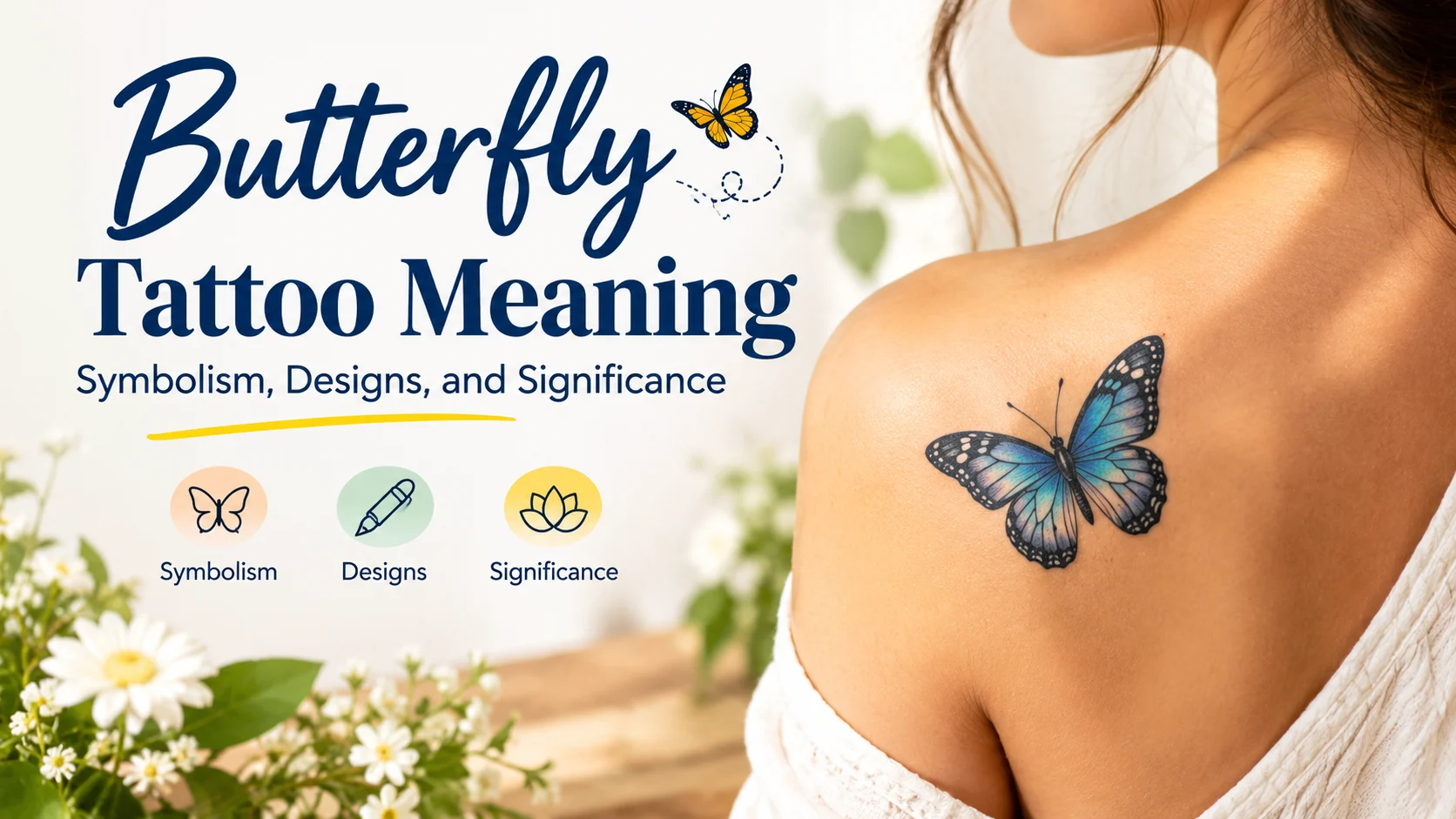
A butterfly tattoo symbolizes transformation, freedom, personal growth, and new beginnings. It can also represent beauty, hope, resilience, or a meaningful life change. From delicate minimalist designs to colorful wings, butterfly tattoos offer a personal way to express growth and individuality.
The butterfly tattoo meaning is commonly associated with transformation, freedom, beauty, personal growth, and new beginnings. A butterfly begins life as a caterpillar, transforms inside a chrysalis, and emerges with wings, making it a powerful symbol of change and personal development. For many people, a butterfly tattoo represents overcoming difficult experiences, embracing independence, or starting a new chapter in life. Others choose it to honor a loved one, celebrate femininity, or express their appreciation for nature. The meaning can also change depending on the butterfly’s color, design, and placement. Whether you are considering your first tattoo or simply curious about its symbolism, understanding these interpretations can help you discover what a butterfly tattoo may represent.
What Does a Butterfly Tattoo Mean?
A butterfly tattoo commonly symbolizes transformation, freedom, hope, beauty, and personal growth. Its meaning comes largely from the butterfly’s life cycle, which involves a remarkable change from caterpillar to winged adult.
Because of this transformation, many people view a butterfly as a reminder that difficult periods can lead to new opportunities and personal development.
Here are some of the most common meanings associated with butterfly tattoos:
- Transformation: Representing a major life change or personal development.
- Freedom: Expressing independence and the desire to live authentically.
- New beginnings: Marking a fresh start after a difficult period.
- Beauty: Celebrating individuality, creativity, and the beauty of nature.
- Hope: Remembering that circumstances can improve over time.
- Resilience: Recognizing the strength required to overcome challenges.
- Love and remembrance: Honoring a meaningful relationship or remembering someone who has passed away.
Not every butterfly tattoo carries the same message. One person may choose it to celebrate a personal achievement, while another may see it as a reminder of a loved one or a new chapter in life.
Its meaning ultimately depends on the wearer, their experiences, and the design they choose.
The Symbolism and History of Butterfly Tattoos
Butterflies have fascinated people across cultures for centuries. Their delicate wings, short adult lifespans, and dramatic transformation have inspired stories, artwork, and symbolic interpretations.
One of the strongest associations comes from metamorphosis. A butterfly develops through several stages before emerging from its chrysalis. This natural process makes it an appealing symbol of change, growth, and renewal.
In ancient Greek, the word psyche can mean both “soul” and “butterfly.” In Greek mythology and later artistic traditions, the butterfly became associated with the soul and the idea of life beyond physical existence.
Butterflies also appear in different cultural traditions with varied meanings. In some Japanese artistic contexts, they can represent beauty, femininity, or relationships. In some Mexican traditions, monarch butterflies are associated with seasonal migration and remembrance, including connections to the spirits of the departed in certain Day of the Dead interpretations.
These associations should not be treated as universal beliefs shared by everyone within a culture.
In modern tattoo culture, butterflies are especially popular because they combine visual beauty with flexible symbolism. A small outline can represent a private personal milestone, while a detailed butterfly surrounded by flowers may express creativity, love, or a connection to nature.
The butterfly’s appeal lies in the fact that it can represent both something deeply personal and something universally recognizable.
Butterfly Tattoo Meaning for Women
For many women, a butterfly tattoo represents independence, femininity, self-confidence, and personal transformation. However, butterfly tattoos are not limited to women, and their symbolism is not determined by gender.
A butterfly’s delicate appearance and dramatic transformation make it a popular choice for people who want to express both softness and strength.
Femininity and Beauty
Some women choose butterfly tattoos to celebrate their personal style, femininity, or appreciation for natural beauty. The design can be delicate, colorful, bold, or abstract, depending on the wearer’s preferences.
Independence and Freedom
A butterfly with open wings can symbolize freedom and the ability to make personal choices. For some wearers, it represents breaking away from expectations or becoming more confident in their identity.
Personal Growth
A butterfly tattoo may mark a significant life change, such as completing an important goal, leaving a difficult situation, or entering a new stage of adulthood.
Self-Love and Confidence
Some people choose butterflies as reminders to accept themselves and appreciate their individual qualities. The tattoo can represent learning to value oneself without relying entirely on outside approval.
Emotional Healing
For someone who has experienced hardship, a butterfly may symbolize the process of healing and rebuilding. It can serve as a reminder that a difficult chapter does not have to define the future.
These meanings are personal interpretations rather than fixed rules. A woman may choose a butterfly simply because she loves the design, without attaching any deeper symbolism to it.
Different Butterfly Tattoo Colors and Their Meanings
Butterfly tattoos come in many colors, and each color can add another layer of personal meaning. However, there is no universal color code for butterfly tattoos. The interpretations below are common associations rather than official definitions.
Blue Butterfly Tattoo
A blue butterfly is often associated with peace, hope, calmness, and personal expression. Some people choose blue because they find it soothing, while others appreciate the distinctive appearance of blue butterfly wings.
Black Butterfly Tattoo
A black butterfly can represent elegance, mystery, remembrance, or a major life transition. Some people use it to honor someone they have lost, while others simply prefer the contrast and simplicity of black ink.
White Butterfly Tattoo
A white butterfly may symbolize purity, peace, innocence, or spiritual reflection. In some personal and cultural contexts, it can also be associated with remembrance or a sense of connection to someone who has passed away.
Purple Butterfly Tattoo
Purple butterflies are sometimes associated with creativity, individuality, spirituality, or personal growth. The color may appeal to people who want a tattoo that feels distinctive and expressive.
Yellow Butterfly Tattoo
A yellow butterfly often suggests happiness, optimism, warmth, and fresh beginnings. Its bright appearance can make it a fitting choice for someone celebrating a positive change.
Red Butterfly Tattoo
A red butterfly may symbolize passion, courage, energy, or intense emotions. Some wearers choose red to represent love or determination.
Orange Butterfly Tattoo
Orange butterflies are commonly associated with enthusiasm, creativity, confidence, and vitality. The color creates a warm, energetic look that works well in colorful tattoo designs.
When selecting a color, consider the message you want to express, your preferred artistic style, and how the colors will complement the overall design.
Different Butterfly Tattoo Designs and Their Meanings
The design of a butterfly tattoo can change its visual message. Some people prefer simple outlines, while others choose realistic wings, floral details, or combinations with other symbols.
Small Butterfly Tattoo
A small butterfly tattoo can represent personal growth, freedom, or a private reminder of change. Its minimal size makes it suitable for people who prefer subtle body art.
Realistic Butterfly Tattoo
A realistic butterfly design emphasizes detailed wings, natural colors, and lifelike proportions. It may express appreciation for nature, beauty, and the complexity of the natural world.
Butterfly With Flowers
Flowers combined with butterflies often symbolize growth, beauty, renewal, and the relationship between nature and life. Different flowers may add meanings associated with love, remembrance, or personal milestones.
Butterfly With a Semicolon
A butterfly combined with a semicolon can represent transformation, hope, resilience, and continuing through difficult times. The semicolon has a recognized association with mental health awareness and suicide prevention, while the butterfly adds the idea of change and renewal.
However, this combination does not automatically indicate a person’s mental health history.
Butterfly With a Name
Adding a name can turn a butterfly tattoo into a tribute to a loved one, child, partner, or family member. The butterfly may symbolize that person’s importance or serve as a lasting reminder of a relationship.
Butterfly With a Skull
A butterfly paired with a skull creates a contrast between life and death. Some people interpret it as a reminder of mortality, the temporary nature of life, or transformation after a major experience.
Two Butterflies
Two butterflies may symbolize friendship, romantic love, companionship, or a close family connection. Matching designs can represent a shared experience or relationship.
Butterfly in Flight
A butterfly with open wings or an appearance of movement often symbolizes freedom, independence, and moving forward. This design can be particularly meaningful to someone entering a new chapter in life.
Each design can carry a different meaning, but personal interpretation matters more than any general symbolism guide.
Butterfly Tattoo Meaning on Different Body Parts
Tattoo placement affects visibility, size, and the way a butterfly design fits the body. Although some people attach personal symbolism to a particular location, there are no universal meanings for butterfly tattoos on specific body parts.
Butterfly Tattoo on the Wrist
A wrist tattoo is easy to see and can serve as a daily reminder of hope, freedom, or personal growth. Small butterfly outlines are especially popular in this location.
Butterfly Tattoo on the Shoulder
The shoulder provides room for medium-sized or detailed butterfly designs. It can also accommodate flowers or other decorative elements.
Butterfly Tattoo on the Back
The back offers a large canvas for symmetrical butterflies, multiple butterflies, or elaborate designs with floral patterns. Some people choose this placement for its artistic possibilities.
Butterfly Tattoo on the Neck
A butterfly tattoo on the neck can be visually striking and expressive. Depending on its size and position, it may be more visible than tattoos placed on the back or shoulder.
Butterfly Tattoo on the Ankle
An ankle tattoo offers a relatively subtle option for people who prefer small or delicate designs. It can be easily displayed or covered depending on footwear and clothing.
Butterfly Tattoo on the Thigh
The thigh provides enough space for detailed wings, realistic shading, and larger compositions. It is also a location that can remain private when covered by clothing.
Butterfly Tattoo Behind the Ear
A small butterfly behind the ear can create a discreet, delicate design. Some people choose it because they want a tattoo that is visible only in certain situations.
When choosing placement, consider the size of the design, your comfort, professional requirements, and how much detail the tattoo artist can preserve in the available space.
Butterfly Tattoo Meaning in Love and Relationships
Butterflies can symbolize love, romance, emotional growth, and the changing nature of relationships.
Some people choose butterfly tattoos to represent a romantic relationship that helped them grow or changed their outlook on life. Others use matching butterfly tattoos to celebrate a friendship, sibling relationship, or family connection.
A pair of butterflies may represent two people who support one another while maintaining their individuality. A butterfly with a heart can emphasize affection, compassion, or self-love.
Butterflies can also represent the process of moving forward after a relationship ends. In this context, the tattoo may symbolize independence, healing, or the decision to begin a new chapter.
However, a butterfly tattoo does not automatically mean someone is in love, has recently ended a relationship, or is looking for a partner.
Its meaning depends on the wearer. For some people, it represents a specific relationship; for others, it symbolizes a broader appreciation for freedom, growth, and the connections that shape their lives.
Butterfly Tattoo Meaning in Different Cultures
Butterflies have different symbolic associations across cultures, art traditions, and spiritual beliefs. Understanding these differences can provide useful context when choosing a design.
Greek Symbolism
The ancient Greek word psyche means both soul and butterfly. This linguistic connection has contributed to artistic associations between butterflies, the soul, and spiritual ideas.
Japanese Art and Culture
Butterflies appear in Japanese art, clothing, and decorative traditions. Depending on the context, they may represent beauty, femininity, change, or relationships. Their meaning can vary according to the artwork and the surrounding symbols.
Mexican Traditions
Monarch butterflies migrate to Mexico in large numbers, and their seasonal arrival overlaps with the timing of Día de los Muertos. In some Mexican traditions, monarchs are associated with the return of the souls of departed loved ones, although beliefs and practices vary among communities.
Christian Interpretations
Some Christians interpret the butterfly’s transformation as a symbol of resurrection, spiritual renewal, or new life. This is a symbolic interpretation rather than a universal religious rule.
Modern Western Tattoo Culture
In contemporary Western tattoo culture, butterflies commonly symbolize freedom, beauty, transformation, individuality, and personal growth.
These cultural associations should be understood within their specific contexts. A butterfly tattoo can reflect cultural heritage, personal beliefs, artistic taste, or several meanings at once.
Common Misconceptions About Butterfly Tattoos
Although butterfly tattoos are popular, some people misunderstand what they represent.
Misconception 1: Butterfly Tattoos Are Only for Women
Butterfly tattoos are worn by people of all genders. The design can express freedom, transformation, remembrance, or an interest in nature regardless of gender.
Misconception 2: A Butterfly Tattoo Always Means Transformation
Transformation is one of the most common interpretations, but some people choose butterflies purely for their appearance or connection to nature.
Misconception 3: Black Butterfly Tattoos Always Represent Death
A black butterfly may represent remembrance or grief for some people, but it can also symbolize elegance, mystery, strength, or personal style.
Misconception 4: Every Butterfly Color Has a Fixed Meaning
Color symbolism varies across cultures and individuals. A blue butterfly does not always mean peace, and a yellow butterfly does not always represent happiness.
Misconception 5: Butterfly Tattoos Are Too Simple to Be Meaningful
A tattoo’s significance does not depend on its size or complexity. A small butterfly outline can carry a deeply personal story, while a large, colorful design may be chosen primarily for its artistic appeal.
Understanding these distinctions helps people appreciate butterfly tattoos without making assumptions about the person wearing one.
How to Choose a Butterfly Tattoo That Reflects Your Meaning
Choosing a butterfly tattoo becomes easier when you know what you want the design to represent.
1. Decide on your personal symbolism. Think about whether you want to express freedom, transformation, love, remembrance, hope, or another idea.
2. Choose a style. Consider fine-line, minimalist, watercolor, traditional, or realistic artwork. Each style creates a different visual effect.
3. Select colors carefully. Choose colors you enjoy and consider how they work with the rest of the design. You do not need to follow traditional color associations.
4. Consider the size. Small butterflies can look elegant and subtle, while larger designs provide more room for intricate wing patterns.
5. Choose a suitable placement. Think about visibility, comfort, clothing, and how the butterfly’s shape will fit the chosen body part.
6. Find an experienced tattoo artist. Review their portfolio, healed tattoos, hygiene practices, and experience with the style you prefer.
7. Make the design personal. Consider adding a meaningful date, flower, name, or other element if it contributes to your intended message.
8. Think about long-term preferences. A tattoo is a lasting decision. Take time to review the design and make sure you are comfortable with its appearance and placement.
The most important thing is to choose a butterfly tattoo that feels meaningful to you, whether it represents a major life experience or simply something you find beautiful.
Frequently Asked Questions
What does a butterfly tattoo mean?
A butterfly tattoo commonly represents transformation, freedom, beauty, hope, and personal growth. Some people choose it to mark a new beginning, celebrate independence, honor a loved one, or express their appreciation for nature.
What does a butterfly tattoo mean for a woman?
For some women, a butterfly tattoo symbolizes femininity, independence, confidence, or personal transformation. Others choose it for its beauty or connection to nature. Its meaning is personal and is not limited to any gender.
What does a black butterfly tattoo mean?
A black butterfly tattoo may symbolize remembrance, mystery, elegance, transformation, or grief. Its meaning depends on the wearer’s personal experiences, cultural context, and artistic preferences rather than a single universal definition.
What does a blue butterfly tattoo mean?
A blue butterfly tattoo is often associated with peace, hope, calmness, and individuality. Some people choose blue because of its appearance, while others connect it with personal meanings that reflect their experiences.
What does a butterfly tattoo symbolize spiritually?
Spiritually, a butterfly tattoo may represent renewal, the soul, resurrection, or personal transformation. Interpretations vary across religious traditions and individual beliefs, so the design does not have one universally accepted spiritual meaning.
What does a butterfly tattoo mean after a breakup?
After a breakup, a butterfly tattoo may symbolize independence, healing, self-discovery, or the beginning of a new chapter. However, not everyone chooses the design for relationship-related reasons.
What does a butterfly tattoo with a semicolon mean?
A butterfly with a semicolon commonly combines ideas of transformation and hope. The semicolon is associated with mental health awareness and suicide prevention, while the butterfly can represent growth and renewal. The combination remains personal.
Where is the best place to get a butterfly tattoo?
Popular placements include the wrist, shoulder, ankle, back, thigh, and behind the ear. The best location depends on the tattoo’s size, desired visibility, artistic style, and personal comfort.
Conclusion
The butterfly tattoo meaning is closely connected to transformation, freedom, hope, beauty, and personal growth. For some people, it celebrates a new beginning or represents the strength to move beyond difficult experiences. For others, it honors a loved one, expresses individuality, or reflects an appreciation for nature. Colors, designs, cultural traditions, and placement can add personal significance, but no single interpretation applies to everyone. Before choosing a butterfly tattoo, consider the message you want to express and the style that best reflects your personality. A butterfly may be small or elaborate, but its meaning can be as unique as the person wearing it.

42 thoughts on “Butterfly Tattoo Meaning| 15+ Designs & Their Symbolism”