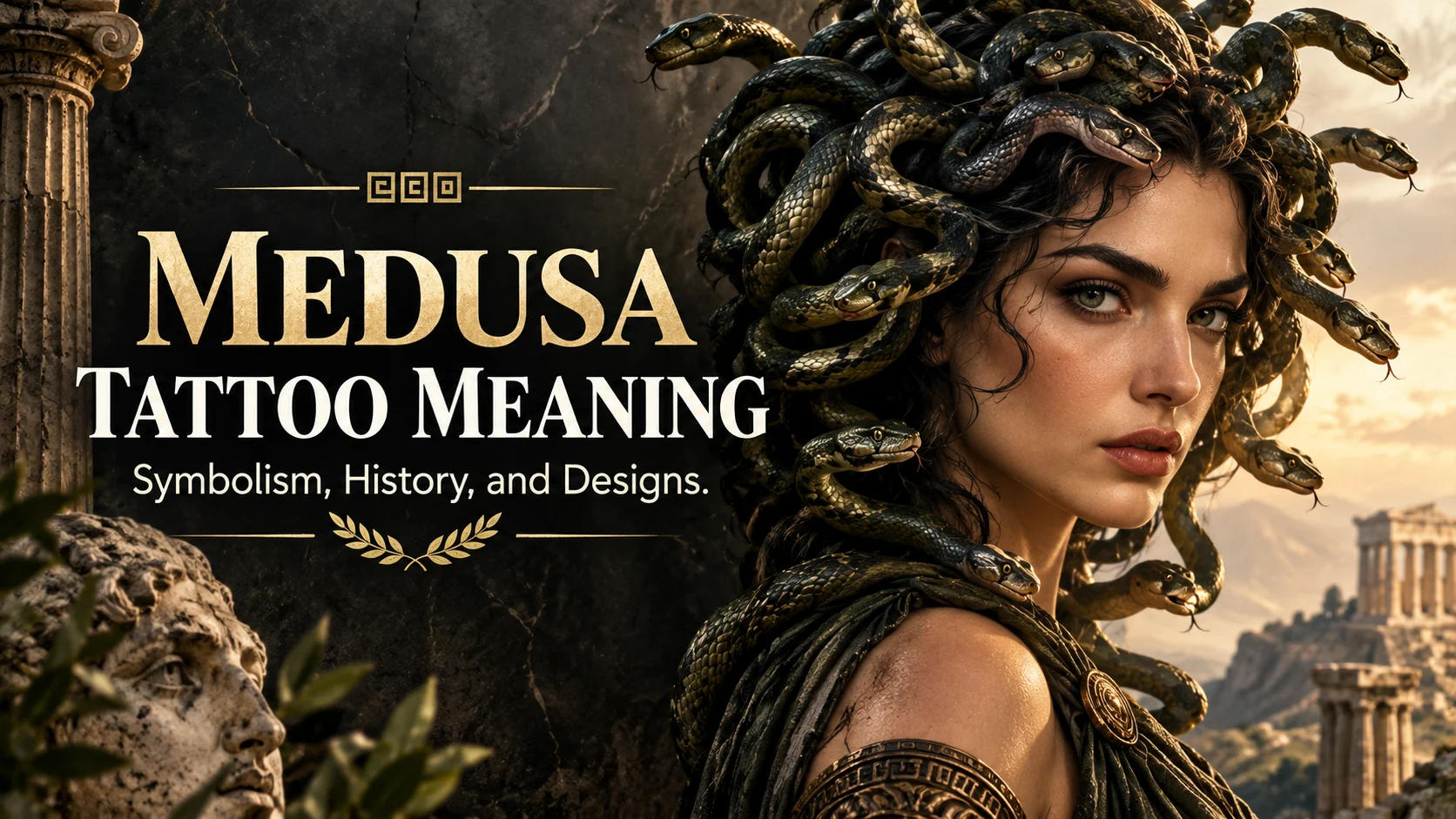
A Medusa tattoo symbolizes strength, protection, survival, and female empowerment, inspired by the powerful figure in Greek mythology. For many, it represents overcoming trauma, reclaiming personal power, and embracing resilience, while its meaning varies with individual experiences and tattoo designs.
The Medusa tattoo meaning can include strength, protection, survival, feminine power, and personal transformation. In Greek mythology, Medusa is a Gorgon with snakes for hair and a gaze that can turn people to stone. Today, her image has become a popular tattoo choice for people who connect with her story, admire her powerful appearance, or want to express independence and resilience. Some people also associate Medusa tattoos with sexual assault survival and healing, although this meaning does not apply to everyone. Whether you are considering getting a Medusa tattoo or simply curious about its symbolism, understanding its history and modern interpretations can help you appreciate what this mysterious figure represents.
What Does a Medusa Tattoo Mean?
A Medusa tattoo commonly represents strength, protection, resilience, independence, and transformation. Its meaning depends on the person wearing it, the design, and the message they want to express.
Medusa is one of the most recognizable figures in Greek mythology. Her snake-covered head and frightening gaze make her a powerful symbol of danger and defense. In modern tattoo culture, people often reinterpret her story as a symbol of overcoming hardship and reclaiming personal power.
Here are some common meanings associated with Medusa tattoos:
- Strength: Facing challenges and continuing to move forward.
- Protection: Representing personal boundaries and the desire to feel safe.
- Feminine power: Expressing independence, confidence, and resistance to control.
- Survival: Remembering a difficult experience and recognizing personal resilience.
- Transformation: Symbolizing a new beginning or a period of personal growth.
- Mystery: Expressing an interest in dark mythology, powerful imagery, and the unknown.
These interpretations can overlap, but they are not universal. Someone might choose a Medusa tattoo because they admire Greek mythology, while another person may connect it to a meaningful personal experience.
The History of Medusa in Greek Mythology
Medusa comes from ancient Greek mythology, where she is known as one of the Gorgons. In many familiar versions of the story, she has snakes instead of hair and the ability to turn anyone who looks directly at her into stone.
Medusa’s story has several versions. In the Roman poet Ovid’s account in Metamorphoses, Medusa was once a beautiful woman who experienced an encounter involving Neptune and was subsequently transformed by Minerva. This version differs from earlier Greek traditions, so it is important not to treat every detail as part of a single, consistent ancient myth.
The Greek hero Perseus eventually kills Medusa by using a reflective shield to avoid looking directly at her.
Despite her frightening reputation, Medusa’s image has also been associated with protection. In ancient Greek art, the Gorgon’s head appeared on objects, shields, and architectural decorations as a protective emblem believed to ward off danger.
This contrast helps explain why Medusa remains such an interesting tattoo subject. Her image can represent both fearsome power and protection against threats.
Modern interpretations have also transformed her into a symbol of resilience, feminine independence, and resistance to injustice.
Medusa Tattoo Meaning for Women
For many women, a Medusa tattoo symbolizes confidence, independence, self-protection, and the ability to overcome difficult circumstances.
Medusa’s story has often been reexamined through the themes of power, vulnerability, and unfair treatment. Some modern interpretations portray her as a figure who has been misunderstood or punished and whose image can be reclaimed as a symbol of strength.
Women may choose this tattoo to represent several personal values.
Independence: The tattoo can express the freedom to make personal choices without depending on other people’s approval.
Confidence: Medusa’s powerful appearance may represent self-assurance and the courage to embrace one’s identity.
Resilience: Some wearers use the design to remember difficult periods they have survived.
Personal boundaries: Medusa’s intimidating gaze can symbolize a determination to protect personal space and well-being.
Self-acceptance: The tattoo may represent accepting one’s past, appearance, personality, or experiences.
However, Medusa tattoos are not limited to women. People of any gender may choose this design because of its mythology, visual appeal, or personal symbolism.
The meaning should always be understood in the context of the individual rather than assumptions about their gender or life experiences.
Does a Medusa Tattoo Mean Sexual Assault Survival?
A Medusa tattoo is sometimes associated with sexual assault survival, healing, and reclaiming personal power after abuse.
This interpretation comes partly from modern readings of Medusa’s mythology, especially versions in which she experiences sexual violence and is subsequently punished or transformed. Some survivors connect with her story because it raises questions about victim-blaming, injustice, and the struggle to regain control.
For these individuals, a Medusa tattoo may represent:
- Surviving a painful or traumatic experience.
- Reclaiming control over their body and identity.
- Replacing shame with self-respect.
- Recognizing personal strength and progress.
- Remembering a journey toward healing.
However, a Medusa tattoo does not automatically mean someone has experienced sexual assault. Many people choose the design for entirely different reasons, including mythology, protection, artistic expression, or feminine empowerment.
It is important to respect people’s privacy. If someone has a Medusa tattoo, do not assume anything about their personal history or ask intrusive questions. The person wearing the tattoo has the right to decide whether they want to share its meaning.
Different Medusa Tattoo Designs and Their Meanings
Medusa tattoos come in many styles, from detailed portraits to small, minimalist designs. The artwork can influence how the tattoo is interpreted, although no design has one universally accepted meaning.
Realistic Medusa Tattoo
A realistic Medusa tattoo often features detailed facial expressions, textured snakes, and dramatic shading. It can represent strength, mystery, mythology, or the complexity of human experiences.
Medusa With Snakes
Snakes are one of Medusa’s most recognizable features. They may symbolize transformation, danger, defense, and renewal. For some people, the snakes also represent the ability to face difficult circumstances without losing confidence.
Small Medusa Tattoo
A small Medusa tattoo can be a subtle expression of personal strength, independence, or an interest in Greek mythology. Its size does not determine how meaningful it is to the wearer.
Medusa With Roses
Combining Medusa with roses creates a contrast between beauty and danger. Some people interpret this design as a symbol of growth after hardship, while others simply appreciate the artistic combination.
Crying Medusa Tattoo
A crying Medusa design may represent grief, vulnerability, emotional pain, or healing. It can also reflect the tragic elements of her mythology. These meanings depend on the wearer’s personal interpretation.
Fierce Medusa Tattoo
A fierce expression, sharp details, and prominent snakes can create an image of confidence and defiance. Some wearers use this design to express determination and strong personal boundaries.
Traditional Greek Medusa Tattoo
A design inspired by ancient Greek art may represent an appreciation for classical mythology, historical symbolism, and traditional artistic styles.
When selecting a design, consider which elements reflect your intended meaning. You can discuss your ideas with a tattoo artist to develop an image that feels personal rather than simply following a trend.
What Does a Medusa Tattoo Mean on Different Body Parts?
The placement of a Medusa tattoo can affect its appearance, visibility, and personal significance. However, there is no universal rule that assigns a specific symbolic meaning to each body part.
Medusa Tattoo on the Forearm
A forearm tattoo is relatively visible and may serve as a daily reminder of confidence, resilience, or a personal belief. It also provides space for detailed designs.
Medusa Tattoo on the Thigh
The thigh offers room for larger portraits and elaborate snake patterns. Some people prefer this location because it allows them to keep their tattoo relatively private.
Medusa Tattoo on the Back
The back can accommodate detailed artwork with flowing snakes, classical elements, and larger compositions. The placement may appeal to people who want a dramatic design.
Medusa Tattoo on the Wrist
A small wrist tattoo can serve as a personal reminder of strength, independence, or protection. Because it is easy to see, some wearers choose it for its everyday significance.
Medusa Tattoo on the Shoulder
The shoulder provides space for portrait-style artwork and can be extended into a larger upper-arm design. Its visibility depends on clothing and the tattoo’s exact position.
Medusa Tattoo on the Chest
A chest tattoo may carry personal significance because of its placement close to the body. Some people choose this area for meaningful artwork they do not necessarily want to display publicly.
Ultimately, placement is a personal decision. Consider your preferred style, comfort, professional environment, and the amount of detail you want before making a final choice.
Medusa Tattoo Meaning in Modern Culture
Medusa has become a recognizable figure in contemporary art, fashion, literature, and tattoo culture. Her image continues to attract attention because her story can be interpreted in several different ways.
Feminine Empowerment
Modern feminist interpretations sometimes present Medusa as a figure of resistance who challenges traditional ideas about beauty, vulnerability, and power.
Personal Transformation
The dramatic changes in Medusa’s story make her a meaningful symbol for people who have experienced major life transitions. A tattoo may mark a new beginning or a change in how someone sees themselves.
Protection and Boundaries
Medusa’s frightening gaze and historical association with protective imagery make her a natural choice for people who want a tattoo representing defense and personal boundaries.
Interest in Dark Mythology
Some people simply appreciate the mysterious and dramatic nature of Greek mythology. Medusa offers a striking subject for tattoo art without requiring a personal or emotional backstory.
Artistic Expression
The combination of a human face, snakes, and classical imagery gives tattoo artists many creative possibilities. A Medusa tattoo can be delicate, realistic, traditional, abstract, or highly detailed.
These interpretations show why Medusa’s image continues to evolve. The same tattoo can communicate different ideas to different people, and that flexibility is part of its appeal.
Real-Life Examples of Medusa Tattoo Meanings
The following examples illustrate how people might explain their tattoos in everyday conversations. They are fictional examples, not verified statements from actual tattoo wearers.
Example 1: Representing Strength
Friend: “Why did you get a Medusa tattoo?”
You: “It reminds me that I can face difficult situations and still keep moving forward.”
Meaning: The tattoo represents resilience and personal strength.
Example 2: Representing Protection
Friend: “Does your tattoo have a special meaning?”
You: “For me, Medusa represents protecting my peace and standing up for myself.”
Meaning: The design symbolizes boundaries and self-respect.
Example 3: Expressing an Interest in Mythology
Friend: “Why Medusa instead of another mythological character?”
You: “I’ve always found Greek mythology fascinating, and her story is one of the most interesting.”
Meaning: The tattoo reflects an appreciation for mythology and classical art.
Example 4: Celebrating Independence
Friend: “What does Medusa mean to you?”
You: “She reminds me to trust myself and make my own decisions.”
Meaning: The tattoo represents independence and confidence.
Example 5: Keeping a Personal Story Private
Friend: “What’s the story behind your tattoo?”
You: “It means a lot to me, but I’d rather keep the details personal.”
Meaning: A tattoo can have deep significance without requiring someone to disclose private experiences.
These examples demonstrate that people can explain their Medusa tattoos in different ways. There is no requirement to share a personal story or adopt a particular interpretation.
Common Misconceptions About Medusa Tattoos
Although Medusa tattoos are popular, some assumptions about their meaning can cause confusion.
Misconception 1: Every Medusa Tattoo Represents Sexual Assault
This is incorrect. Some survivors connect the tattoo with healing and reclaiming personal power, but many others choose it for mythology, protection, artistic expression, or different personal reasons.
Misconception 2: Only Women Can Get Medusa Tattoos
Medusa is a mythological figure whose symbolism can appeal to anyone. The design is not restricted to a particular gender.
Misconception 3: Medusa Tattoos Always Represent Anger
Medusa’s appearance can seem intimidating, but the tattoo may represent confidence, vulnerability, protection, beauty, or transformation. Its meaning cannot be determined by appearance alone.
Misconception 4: There Is One Official Meaning
There is no single universal meaning for a Medusa tattoo. Its symbolism varies according to personal experiences, artistic choices, and cultural interpretations.
Misconception 5: A Tattoo Reveals Someone’s Personal History
A tattoo cannot reliably tell you what someone has experienced. It is inappropriate to assume that a person has experienced trauma or abuse simply because they have a Medusa design.
Understanding these distinctions encourages more respectful conversations about tattoos and their symbolism.
How to Choose a Medusa Tattoo That Reflects Your Meaning
If you are considering a Medusa tattoo, take time to decide what you want the design to represent. A clear idea can help you choose artwork that remains meaningful over time.
1. Decide on your personal meaning. Consider whether you connect with Medusa through mythology, independence, protection, transformation, or another idea.
2. Choose a tattoo style. Explore realistic portraits, fine-line artwork, traditional designs, and minimalist illustrations to find a style that suits you.
3. Consider the size. Detailed snakes and facial features may require more space, while simpler designs can work well at smaller sizes.
4. Select a suitable placement. Think about visibility, comfort, clothing, and how the design will fit the chosen body part.
5. Research your tattoo artist. Review their portfolio, healed work, hygiene standards, and experience with your preferred style.
6. Discuss your ideas. Explain the elements you want to include and ask the artist how to create a balanced, readable design.
7. Take your time. Review the design carefully before committing. Tattoos are long-term choices, so you should feel comfortable with both the artwork and its placement.
You do not need to justify your tattoo to others. Whether the meaning is deeply personal or simply artistic, what matters most is that the design reflects your own preferences and intentions.
Frequently Asked Questions
What does a Medusa tattoo mean?
A Medusa tattoo commonly symbolizes strength, protection, resilience, feminine power, and transformation. Some people associate it with sexual assault survival, while others choose it because of Greek mythology or its dramatic artistic style.
What does a Medusa tattoo mean for a woman?
For some women, a Medusa tattoo represents independence, confidence, self-protection, or overcoming adversity. Others appreciate the mythology or artwork. Its meaning depends on the individual and should not be used to make assumptions about personal experiences.
Does a Medusa tattoo mean someone was sexually assaulted?
No. Some survivors use Medusa tattoos to represent healing or reclaiming personal power, but this interpretation is not universal. Many people choose the design for other reasons, and a tattoo does not reveal someone’s personal history.
What does a Medusa tattoo symbolize in Greek mythology?
In Greek mythology, Medusa is a Gorgon whose gaze can turn people to stone. Her image has been associated with danger and protection, while modern interpretations often explore power, vulnerability, transformation, and resistance.
Is a Medusa tattoo a symbol of protection?
It can be. Medusa’s image appeared in ancient Greek protective imagery, including the Gorgon’s head used to ward off danger. Modern wearers may draw on this history to express personal boundaries, strength, or confidence.
What does a small Medusa tattoo mean?
A small Medusa tattoo can represent strength, independence, mythology, or a personal reminder of resilience. Its size does not determine its importance. A simple design can carry just as much personal meaning as a larger tattoo.
Do Medusa tattoos have a negative meaning?
Not inherently. Some people associate Medusa with danger or fear because of her mythological powers, while others interpret her as a symbol of empowerment, survival, or protection. The meaning depends on the design and the wearer.
Is it disrespectful to get a Medusa tattoo?
Generally, getting a Medusa tattoo is a personal artistic choice, and there is no universal rule that makes it disrespectful. Learning about the mythology and treating sensitive interpretations thoughtfully can help you make an informed decision.
Conclusion
The Medusa tattoo meaning goes far beyond a striking face surrounded by snakes. It can represent strength, protection, independence, resilience, or a personal connection to Greek mythology. For some people, it also marks survival and healing, but that interpretation should never be assumed. The design, placement, and personal story all shape what the tattoo means. In modern culture, Medusa remains a powerful symbol that invites different interpretations. Before choosing this tattoo, consider the message you want to carry and the artwork that best expresses it. Ultimately, the most meaningful tattoo is one whose story you can confidently call your own.

16 thoughts on “Medusa Tattoo Meaning| 7 Powerful Symbols & Designs”