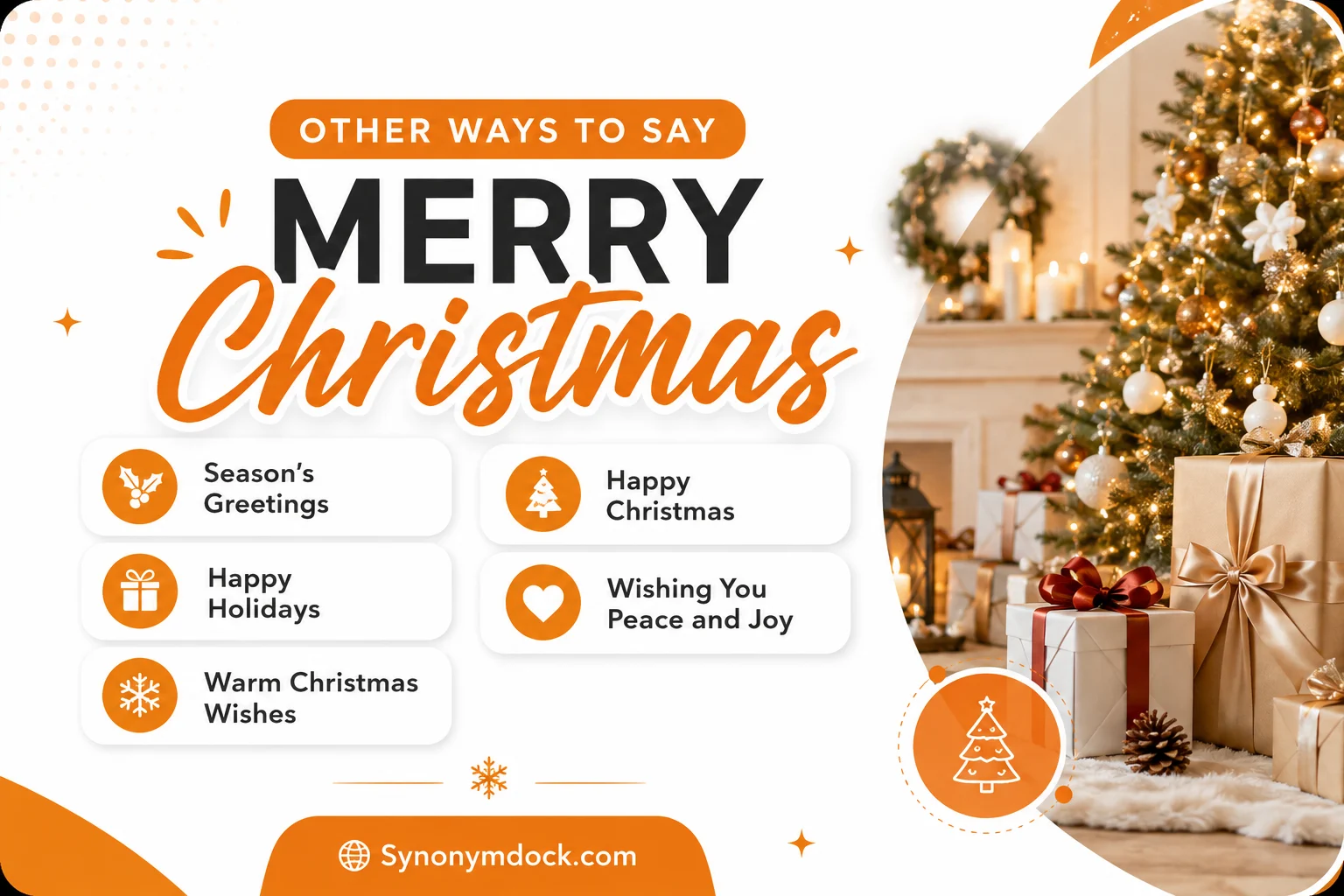
“Merry Christmas” is a traditional holiday greeting used to express goodwill and festive cheer during the Christmas season. Try “Season’s Greetings” for professional settings, “Happy Holidays” for inclusivity, “Warm Christmas Wishes” for cards, “Happy Christmas” for British English, and “Wishing You Peace and Joy” for a more thoughtful message.
The holiday season is a time for connection, warmth, and sharing joy with others. For English learners, knowing how to express holiday wishes in different ways helps you sound more natural and culturally aware. While “Merry Christmas” is the most common phrase, using alternatives to “Merry Christmas” allows you to adapt your greeting to different audiences, relationships, and situations .
Whether you are writing a professional email, sending a heartfelt card to a friend, or posting on social media, choosing the right festive greeting shows thoughtfulness and emotional intelligence. This guide provides 15+ alternatives to help you communicate with confidence and warmth .
Quick Categories
Formal Alternatives
- Season’s Greetings
- Best Wishes for the Holidays
- Warmest Christmas Wishes
- Wishing You a Peaceful Christmas
Pro Tip: Use these in professional emails, client communication, and formal cards. They sound respectful and polished .
Professional Alternatives
- Happy Holidays
- Wishing You a Joyful Holiday Season
- Season’s Greetings and Best Wishes
- Wishing You Continued Success in the New Year
Pro Tip: These are ideal for workplace communication. They maintain professionalism while spreading holiday cheer .
Business Email Alternatives
- Wishing You a Prosperous New Year
- Thank You for Your Partnership This Year
- Wishing You a Restorative Holiday Break
- Best Wishes for the Festive Season
Pro Tip: Combine holiday wishes with gratitude for business relationships. This strengthens professional connections .
Academic Alternatives
- Wishing You a Peaceful Holiday Season
- May Your Break Be Restorative
- Wishing You Time with Loved Ones
- Warm Wishes for a Joyful Season
Pro Tip: Academic settings appreciate thoughtful, inclusive language. Focus on rest and renewal rather than religious references .
Casual Alternatives
- Happy Christmas
- Cheers to the Holidays
- Wishing You Christmas Cheer
- Have a Wonderful Christmas
Pro Tip: These work well with friends, family, and close colleagues. They sound friendly and approachable .
“The right holiday greeting shows you understand your audience. It’s not just about saying something it’s about saying the right thing.”
Common Mistakes
Mistake 1: Using “Merry Christmas” in Diverse Workplaces
- Why it is incorrect: Not everyone celebrates Christmas. This can feel exclusive or insensitive .
- Correct Version: Use “Happy Holidays” or “Season’s Greetings” to be inclusive .
- Example: ❌ “Merry Christmas to everyone in the department.” ✅ “Happy Holidays to everyone in the department.”
Mistake 2: Using “Happy Christmas” in American Professional Emails
- Why it is incorrect: “Happy Christmas” is more common in British English. American audiences may find it unusual .
- Correct Version: Use “Merry Christmas” for American audiences or “Season’s Greetings” for neutral professional tone.
- Example: ❌ “Happy Christmas to our American clients.” ✅ “Season’s Greetings to our American clients.”
Mistake 3: Using “Seasons Greetings” Instead of “Season’s Greetings”
- Why it is incorrect: The apostrophe is required to show possession .
- Correct Version: “Season’s Greetings” (Greetings of the season).
- Example: ❌ “Seasons Greetings from our team.” ✅ “Season’s Greetings from our team.”
Mistake 4: Overly Religious Language in Professional Settings
- Why it is incorrect: “Christmas Blessings” or similar phrases may not be appropriate in diverse workplaces .
- Correct Version: Use neutral greetings like “Warm Holiday Wishes” or “Best Wishes for the Season.”
- Example: ❌ “Christmas blessings to our clients.” ✅ “Warm holiday wishes to our clients.”
Mistake 5: Forgetting to Personalize Your Greeting
- Why it is incorrect: Generic greetings can feel impersonal and insincere .
- Correct Version: Add a personal touch when appropriate.
- Example: ❌ “Merry Christmas.” ✅ “Wishing you and your family a Merry Christmas and a wonderful New Year.”
What Does “Merry Christmas” Mean?
“Merry Christmas” is a traditional greeting exchanged during the Christmas season. It combines the word “merry,” meaning cheerful and festive, with “Christmas,” the Christian holiday celebrating the birth of Jesus Christ . Over time, it has become a secular expression of goodwill shared by people of all backgrounds during the holiday season.
Example: “Merry Christmas to you and your loved ones.”
When to Use “Merry Christmas”
- Christmas Day: The most natural time to say it.
- Christmas Eve: A common greeting on the evening of December 24th.
- Holiday Parties: Appropriate at social gatherings.
- Cards and Letters: A standard closing in holiday correspondence.
- Family and Friends: The most common context.
- Religious Celebrations: Appropriate in church or religious contexts.
- Social Media: A popular hashtag and caption choice.
Spoken vs Written: Use it freely in both speech and writing. It works in casual conversation, holiday cards, and social media posts .
Formal vs Informal: While it is acceptable in professional settings, more inclusive or formal alternatives may be preferred in diverse workplaces .
Is It Professional or Polite to Say “Merry Christmas”?
“Merry Christmas” is polite and widely accepted. However, it may not always be the most professional choice, especially in diverse or multicultural workplaces .
Business Example: “Merry Christmas to you and your family. We appreciate your partnership this year.”
| Professional? | ✅ Yes, in many workplaces |
|---|---|
| Polite? | ✅ Yes |
| Formal? | Neutral not overly formal |
| Natural? | Yes, in Christian-majority countries |
Pros and Cons of Using “Merry Christmas”
Pros
- Widely recognized and understood
- Warm and friendly
- Traditional and classic
- Easy to use
Cons
- May not be inclusive of all cultures and religions
- Can feel repetitive
- Overused during the holiday season
- May not be appropriate in some professional contexts
The best holiday greetings don’t just say something they show you’ve considered the person on the other side.
15+ Best Alternatives to “Merry Christmas”
[1]. Phrase: Season’s Greetings
Meaning: A neutral, formal greeting for the holiday season.
Explanation: “Season’s Greetings” is one of the most popular alternatives . It covers the entire holiday period and is appropriate for any audience, making it a safe, professional choice for cards and workplace messages .
Example Sentence: “Season’s Greetings to you and your family from all of us at the office.”
Best Use: Business emails, cards, professional settings.
Avoid Using In: Casual conversations with close friends.
Tone: Formal, Neutral, Professional.
Formality Level: ⭐⭐⭐⭐ Formal
Usage Frequency: Very Common
CEFR Level: B1
Common Collocations:
- warm season’s greetings
- season’s greetings and best wishes
- season’s greetings from our team
Context Variability:
- Spoken English: “Season’s greetings, everyone.”
- Professional English: “Season’s Greetings and best wishes for the New Year.”
- Casual Conversation: (Less common sounds formal)
[2]. Phrase: Happy Holidays
Meaning: An inclusive greeting covering Christmas and other winter holidays.
Explanation: “Happy Holidays” is widely used in the United States and is the most inclusive alternative . It acknowledges Christmas, Hanukkah, Kwanzaa, and New Year’s, making it perfect for diverse workplaces and multicultural audiences .
Example Sentence: “Happy Holidays to you and your loved ones. Enjoy this special time together.”
Best Use: Diverse workplaces, social media, public settings.
Avoid Using In: Situations where you know someone specifically celebrates Christmas.
Tone: Neutral, Inclusive, Warm.
Formality Level: ⭐⭐⭐ Neutral
Usage Frequency: Very Common
CEFR Level: A2
Common Collocations:
- warm happy holidays
- happy holidays and a prosperous New Year
Context Variability:
- Spoken English: “Happy holidays see you next year!”
- Professional English: “Wishing you and your team happy holidays.”
[3]. Phrase: Warm Christmas Wishes
Meaning: A heartfelt expression of goodwill during Christmas.
Explanation: This greeting feels sincere and personal . It conveys genuine warmth and care, making it an excellent choice for greeting cards and thoughtful messages .
Example Sentence: “Sending you warm Christmas wishes and best wishes for a joyful New Year.”
Best Use: Cards, personal messages, thoughtful emails.
Avoid Using In: Very formal business communication.
Tone: Warm, Sincere, Caring.
Formality Level: ⭐⭐⭐ Neutral
Usage Frequency: Very Common
CEFR Level: B1
Common Collocations:
- warm Christmas wishes to you
- sending warm Christmas wishes
Context Variability:
- Spoken English: “Warm Christmas wishes to you all.”
- Professional English: “Sending warm Christmas wishes to our valued clients.”
[4]. Phrase: Happy Christmas
Meaning: The traditional British version of “Merry Christmas.”
Explanation: “Happy Christmas” is more common in the United Kingdom than “Merry Christmas” . While it is rarely used in the United States, it is the preferred greeting in British English and many Commonwealth countries.
Example Sentence: “Happy Christmas to you and your family. We hope you have a lovely celebration.”
Best Use: British English contexts, UK audiences.
Avoid Using In: American English professional settings.
Tone: Friendly, Traditional, Warm.
Formality Level: ⭐⭐⭐ Neutral
Usage Frequency: Very Common (UK), Occasional (US)
CEFR Level: A2
Common Collocations:
- happy Christmas to you
- happy Christmas and a prosperous New Year
Context Variability:
- Spoken English: “Happy Christmas, everyone!”
- Professional English: (Common in UK professional settings)
[5]. Phrase: Wishing You Peace and Joy
Meaning: A thoughtful greeting emphasizing emotional harmony and happiness.
Explanation: This greeting focuses on universal values of peace and joy rather than religious celebration . It is widely used in community greetings and thoughtful cards, making it a beautiful choice for any audience.
Example Sentence: “Wishing you peace and joy this holiday season from our family to yours.”
Best Use: Community greetings, thought cards, inclusive messages.
Avoid Using In: Very casual conversations.
Tone: Thoughtful, Warm, Gentle.
Formality Level: ⭐⭐⭐ Neutral
Usage Frequency: Common
CEFR Level: B1
Common Collocations:
- wishing you peace and joy
- peace and joy this Christmas
Context Variability:
- Spoken English: “Wishing you peace and joy at Christmas.”
- Professional English: “Wishing you peace and joy this holiday season.”
[6]. Phrase: Joyful Christmas to You
Meaning: A festive greeting emphasizing celebration and happiness.
Explanation: This alternative focuses on happiness and celebration . It adds emotional warmth and sounds enthusiastic without being overly casual .
Example Sentence: “A joyful Christmas to you and your loved ones. May your day be full of laughter and love.”
Best Use: Friendly and personal conversations, cards.
Avoid Using In: Formal business settings.
Tone: Happy, Friendly, Festive.
Formality Level: ⭐⭐ Casual
Usage Frequency: Common
CEFR Level: B1
Common Collocations:
- joyful Christmas to you
- a joyful Christmas season
Context Variability:
- Spoken English: “Joyful Christmas to you and your family.”
- Professional English: (Occasionally used in friendly workplace settings)
[7]. Phrase: Wishing You a Blessed Christmas
Meaning: A faith-based Christmas greeting.
Explanation: “Blessed Christmas” carries religious weight and is appropriate for family, church, and traditional contexts . It should only be used when you are certain the recipient shares or appreciates this language.
Example Sentence: “Wishing you a blessed Christmas filled with peace and happiness.”
Best Use: Religious contexts, family, traditional settings.
Avoid Using In: Diverse workplaces, professional emails.
Tone: Spiritual, Warm, Traditional.
Formality Level: ⭐⭐⭐ Neutral
Usage Frequency: Common
CEFR Level: B1
Common Collocations:
- blessed Christmas to you
- a blessed Christmas and happy New Year
Context Variability:
- Spoken English: “Blessed Christmas to you and yours.”
- Professional English: (Not recommended for diverse workplaces)
[8]. Phrase: May Your Christmas Be Bright
Meaning: A poetic wish for happiness and positivity.
Explanation: This alternative is cheerful and poetic . It evokes imagery of a bright and joyful celebration, making it a beautiful choice for cards and festive posts.
Example Sentence: “May your Christmas be bright and filled with joy, laughter, and all the things you love.”
Best Use: Cards, social media, creative messages.
Avoid Using In: Formal business contexts.
Tone: Poetic, Cheerful, Warm.
Formality Level: ⭐⭐ Casual
Usage Frequency: Occasional
CEFR Level: B1
Common Collocations:
- may your Christmas be bright and joyful
Context Variability:
- Spoken English: “May your Christmas be bright and merry.”
- Professional English: (Occasional in friendly emails)
[9]. Phrase: Cheers to the Holidays
Meaning: A celebratory expression marking the holiday season.
Explanation: This informal alternative feels upbeat and conversational . It works well in social media posts and casual messages but is generally too informal for professional contexts.
Example Sentence: “Cheers to the holidays and a wonderful New Year ahead!”
Best Use: Social media, casual messages, friendly emails.
Avoid Using In: Formal business communication, client emails.
Tone: Casual, Cheerful, Upbeat.
Formality Level: ⭐⭐ Casual
Usage Frequency: Common
CEFR Level: B1
Common Collocations:
- cheers to the holidays
- cheers to Christmas and the New Year
Context Variability:
- Spoken English: “Cheers to the holidays, everyone!”
- Professional English: (Not recommended)
[10]. Phrase: Festive Greetings
Meaning: A cheerful seasonal message.
Explanation: “Festive Greetings” is a bright, positive alternative that works well in semi-formal situations . It is cheerful without being too casual, making it appropriate for workplace emails and cards.
Example Sentence: “Festive greetings to you and your team during this wonderful time of year.
Best Use: Semi-formal emails, workplace messages, cards.
Avoid Using In: Very formal business settings.
Tone: Cheerful, Warm, Professional.
Formality Level: ⭐⭐⭐ Neutral
Usage Frequency: Common
CEFR Level: B1
Common Collocations:
- festive greetings and best wishes
- happy festive season
Context Variability:
- Spoken English: “Festive greetings to all!”
- Professional English: “Festive greetings and best wishes for the season.”
[11]. Phrase: Wishing You Holiday Cheer
Meaning: A casual and friendly holiday wish.
Explanation: “Holiday cheer” conveys festive happiness and goodwill . It is light, positive, and perfect for friendly messages and social posts.
Example Sentence: “Wishing you lots of holiday cheer and wonderful memories with your family.”
Best Use: Friendly messages, social media, casual greetings.
Avoid Using In: Formal business letters.
Tone: Casual, Friendly, Cheerful.
Formality Level: ⭐⭐ Casual
Usage Frequency: Common
CEFR Level: B1
Common Collocations:
- holiday cheer to you
- lots of holiday cheer
Context Variability:
- Spoken English: “Wishing you holiday cheer this season.”
- Professional English: (Occasional in friendly workplace messages)
[12]. Phrase: Enjoy the Christmas Season
Meaning: Encourages relaxation and joy during the festive period.
Explanation: This alternative focuses on the experience of the season itself . It is less religious and more general, making it a nice choice for casual messages and conversations.
Example Sentence: “Enjoy the Christmas season and take some well-deserved time to rest.
Best Use: Casual conversations, friendly emails, texts.
Avoid Using In: Formal business settings.
Tone: Casual, Warm, Encouraging.
Formality Level: ⭐⭐ Casual
Usage Frequency: Common
CEFR Level: B1
Common Collocations:
- enjoy the Christmas season
- enjoy the festive season
Context Variability:
- Spoken English: “Enjoy the Christmas season with your family.”
- Professional English: “Enjoy the Christmas season and we’ll see you in the new year.”
[13]. Phrase: Have a Peaceful Christmas
Meaning: A gentle wish for calm and harmony.
Explanation: “Peaceful Christmas” emphasizes rest and tranquility . It is especially appropriate for stressful times or when someone has had a difficult year .
Example Sentence: “Have a peaceful Christmas and a restful break from work.”
Best Use: Thoughtful messages, stressful times, gentle wishes.
Avoid Using In: Very casual conversations.
Tone: Gentle, Caring, Supportive.
Formality Level: ⭐⭐⭐ Neutral
Usage Frequency: Common
CEFR Level: B1
Common Collocations:
- have a peaceful Christmas
- peaceful Christmas and happy New Year
Context Variability:
- Spoken English: “Have a peaceful Christmas, you deserve it.”
- Professional English: “Wishing you a peaceful Christmas and New Year.”
[14]. Phrase: Warmest Wishes This Christmas
Meaning: A heartfelt expression of care and goodwill.
Explanation: This alternative sounds elegant and sincere . It is suitable for formal and semi-formal settings, such as greeting cards and professional messages.
Example Sentence: “Warmest wishes this Christmas to you and your loved ones.”
Best Use: Cards, formal messages, thoughtful emails.
Avoid Using In: Very casual conversations.
Tone: Warm, Sincere, Elegant.
Formality Level: ⭐⭐⭐⭐ Formal
Usage Frequency: Common
CEFR Level: B1
Common Collocations:
- warmest wishes this Christmas
- warmest Christmas wishes
Context Variability:
- Spoken English: “Warmest wishes this Christmas to you all.”
- Professional English: “Warmest wishes this Christmas from our team.”
[15]. Phrase: Best Wishes for the Holidays
Meaning: A polite and professional holiday greeting.
Explanation: This is a safe, respectful alternative for workplace communication . It conveys goodwill without making assumptions about the recipient’s holiday traditions.
Example Sentence: “Best wishes for the holidays and a prosperous New Year.”
Best Use: Business emails, client communication, professional settings.
Avoid Using In: Personal, casual conversations.
Tone: Professional, Polite, Neutral.
Formality Level: ⭐⭐⭐⭐ Formal
Usage Frequency: Very Common
CEFR Level: B1
Common Collocations:
- best wishes for the holidays
- best wishes for the festive season
Context Variability:
- Spoken English: “Best wishes for the holidays to you all.”
- Professional English: “Best wishes for the holidays and thank you for your partnership.
Native Speaker Tip
“Happy Christmas” is more common in the UK, while “Merry Christmas” is more common in the US . “Happy Holidays” is a safe, inclusive choice in diverse workplaces and is widely used in American English . In British English, “Season’s Greetings” is often preferred for formal cards .
Comparison Table: Top Alternatives
| Phrase | Tone | Formality | Best Use | Frequency |
|---|---|---|---|---|
| Season’s Greetings | Neutral | ⭐⭐⭐⭐ Formal | Business cards | Very Common |
| Happy Holidays | Inclusive | ⭐⭐⭐ Neutral | Diverse workplaces | Very Common |
| Warm Christmas Wishes | Warm | ⭐⭐⭐ Neutral | Cards, messages | Very Common |
| Happy Christmas | Friendly | ⭐⭐⭐ Neutral | UK audiences | Very Common |
| Wishing You Peace and Joy | Thoughtful | ⭐⭐⭐ Neutral | Community greetings | Common |
| May Your Christmas Be Bright | Poetic | ⭐⭐ Casual | Social media | Occasional |
| Cheers to the Holidays | Casual | ⭐⭐ Casual | Social settings | Common |
| Festive Greetings | Cheerful | ⭐⭐⭐ Neutral | Semi-formal emails | Common |
| Warmest Christmas Wishes | Sincere | ⭐⭐⭐⭐ Formal | Cards, formal messages | Common |
| Best Wishes for the Holidays | Professional | ⭐⭐⭐⭐ Formal | Business emails | Very Common |
Which One Should You Use?
Best Overall
Season’s Greetings. It is professional, inclusive, and works in almost every situation .
Best Professional
Best Wishes for the Holidays. It is polite, respectful, and perfect for client communication .
Best Business Email
Warmest Christmas Wishes. It adds a personal touch while maintaining professionalism .
Best Everyday Conversation
Happy Christmas. It is friendly and traditional, especially if you are in the UK or speaking to British colleagues .
Most Natural
Merry Christmas remains the most natural choice for personal contexts. “Happy Holidays” is most natural in diverse American workplaces .
Most Polite
Wishing You Peace and Joy. It is thoughtful, gentle, and universally appropriate .
Scenario Practice
Scenario 1: You are sending a holiday email to all your clients.
- Which phrase would you choose? “Best Wishes for the Holidays” or “Season’s Greetings.”
- Why? These are professional, inclusive, and respectful .
Scenario 2: You are writing a Christmas card to a close friend in the UK.
- Which phrase would you choose? “Happy Christmas.
- Why? “Happy Christmas” is common and traditional in British English .
Scenario 3: You are posting a holiday message on LinkedIn.
- Which phrase would you choose? “Wishing you a joyful holiday season and a prosperous New Year.”
- Why? This is professional yet warm, balancing personal warmth with career focus .
Scenario 4: You are greeting coworkers at an office holiday party.
- Which phrase would you choose? “Happy Holidays” or “Season’s Greetings.”
- Why? These are inclusive and appropriate for diverse workplace settings .
Scenario 5: You are sending a card to a colleague who has had a challenging year.
- Which phrase would you choose? “Wishing You Peace and Joy” or “Have a Peaceful Christmas.”
- Why? These focus on rest and emotional well-being .
Mini Quiz
Question 1:
Which alternative is best for a diverse workplace?
a) Merry Christmas
b) Happy Holidays
c) Christmas Blessings
Question 2:
Which phrase is more common in the UK?
a) Merry Christmas
b) Happy Christmas
c) Happy Holidays
Question 3:
Which alternative is most formal?
a) Cheers to the Holidays
b) Have a wonderful Christmas
c) Season’s Greetings
Question 4:
Which phrase should you avoid in formal business emails?
a) Best wishes for the holidays
b) Cheers to the holidays
c) Warm Christmas wishes
Answer Key
- b) Happy Holidays – It is inclusive and appropriate for diverse settings .
- b) Happy Christmas – “Happy Christmas” is more common in British English .
- c) Season’s Greetings – It is professional, formal, and widely accepted .
- b) Cheers to the holidays – It is too casual for formal business communication .
FAQs
What is the most formal way to say “Merry Christmas”?
“Season’s Greetings” and “Warmest Christmas Wishes” are among the most formal alternatives. They are preferred in professional correspondence, business cards, and formal holiday messages .
Which phrase is best for professional emails?
“Best Wishes for the Holidays,” “Season’s Greetings,” and “Warm Christmas Wishes” are excellent choices for professional emails. They are respectful, polite, and appropriate for client and colleague communication .
What is the difference between “Merry Christmas” and “Happy Christmas”?
“Merry Christmas” is more common in American English, while “Happy Christmas” is the preferred greeting in British English and many Commonwealth countries . They mean the same thing.
Which alternative sounds most natural to native speakers?
“Merry Christmas” remains the most natural choice for personal contexts. “Happy Holidays” is most natural for inclusive, diverse settings in American English .
Can I use these expressions in business settings?
Yes, but choose formal alternatives like “Season’s Greetings,” “Best Wishes for the Holidays,” or “Warm Holiday Wishes” for professional contexts. Avoid overly casual expressions like “Cheers to the Holidays” in formal business communication .
Which alternative do you use most often? Share your favorite holiday greeting in the comments and help other English learners expand their festive vocabulary!
Conclusion
Learning alternatives to “Merry Christmas” helps you communicate with greater cultural awareness, professionalism, and warmth. Whether you choose “Season’s Greetings” for a formal email, “Happy Holidays” for an inclusive workplace, or “Wishing You Peace and Joy” for a thoughtful message, your choice shows that you have considered your audience.
The key is to match your greeting to the situation and the person you are addressing. With these 15+ alternatives, you can confidently express holiday wishes in any context professional or personal, formal or casual.
Meta Description
Character Count: 147
Alt Text: Other ways to say Merry Christmas with 15 professional and casual alternatives for holiday greetings.

1 thought on “Other Ways to Say “Merry Christmas” |10+ Festive Alternatives”